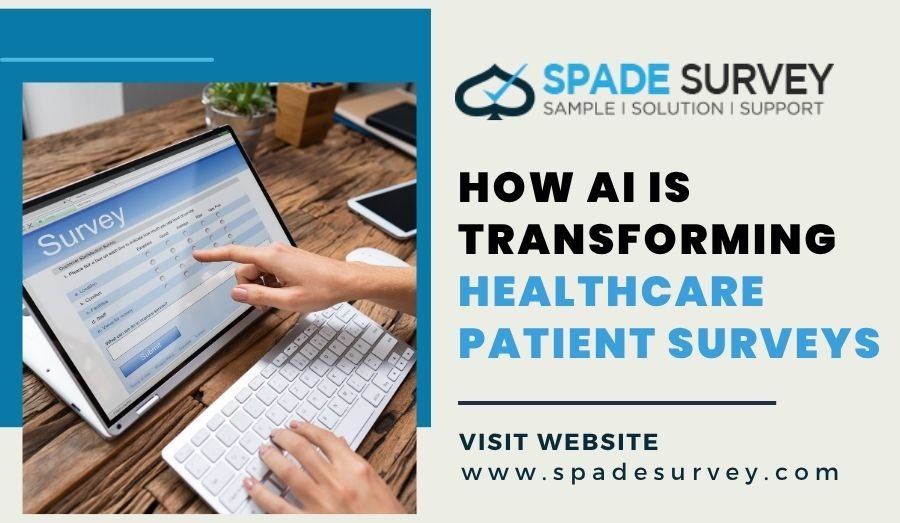
How AI is Transforming Healthcare Patient Surveys
What's Your Reaction?
The healthcare industry is experiencing a major transformation in 2026, driven by the rapid adoption of artificial intelligence (AI) and predictive analytics. From pharmaceutical companies to hospitals and healthcare startups, organizations are increasingly relying on data-driven insights to improve patient care, optimize treatments, and make smarter business decisions. AI in healthcare market research is one area where this change is particularly apparent.
Conventional patient surveys and medical research frequently required a large time, labor, and money commitment. These days, researchers are using AI-powered predictive analytics to collect more precise data, forecast patient behavior, and provide quicker insights. As a result, AI technologies are being included into the workflows of every top client survey firm and healthcare-focused research firm.
Predictive analytics uses historical data, machine learning models, and statistical algorithms to forecast future outcomes. In healthcare market research, this technology is revolutionizing the way patient surveys are designed and analyzed.
One of the biggest improvements in patient surveys is personalization. AI can analyze patient demographics, medical history, behavioral patterns, and previous responses to create customized survey experiences.
Instead of sending the same questionnaire to every participant, predictive analytics helps researchers ask relevant and targeted questions. This improves response quality and increases engagement rates.
For example, a diabetes patient may receive questions related to medication adherence and lifestyle changes, while a cancer patient may be asked about treatment satisfaction and emotional well-being. This personalized approach enhances the effectiveness of Data Collection services in healthcare research.
Low survey participation has long been a challenge in healthcare market research. Predictive analytics can identify the best time, channel, and format to reach respondents.
AI systems analyze patient communication preferences and predict which participants are more likely to respond via email, mobile apps, SMS, or phone calls. This increases survey completion rates and reduces research delays.
AI capabilities can now be used by a contemporary health research firm to optimize survey time, automate reminders, and increase respondent participation without overwhelming respondents.
Traditional survey analysis often required weeks of manual processing and interpretation. In contrast, AI-powered predictive analytics delivers real-time insights by instantly identifying trends, patterns, and anomalies.
Healthcare organizations can quickly understand patient concerns, treatment outcomes, and satisfaction levels. This speed is especially valuable during public health emergencies, clinical trials, or product launches where timely decision-making is critical.
The use of AI also reduces human error in data interpretation, ensuring higher accuracy and consistency across healthcare studies.
To overcome these challenges, organizations must adopt a structured and strategic approach to Monitoring and Evaluation. This includes clear planning, use of technology, stakeholder engagement, and continuous learning.
A strong M&E system not only measures performance but also helps organizations adapt, improve, and achieve long-term success. It enables better decision-making, enhances accountability, and ensures that resources are used effectively.
Read More: The Importance Of Monitoring And Evaluation Studies
Modern Data Collection services are becoming more intelligent and automated than ever before. AI technologies now support multiple forms of healthcare data collection, including:
These data sources provide researchers with a comprehensive view of patient experiences and healthcare trends. Predictive analytics helps combine and interpret this information efficiently, enabling businesses to make evidence-based decisions.
Additionally, AI can identify missing or inconsistent responses during data collection, improving data quality before analysis even begins.
The adoption of AI in Healthcare Market research offers several advantages for healthcare organizations, pharmaceutical companies, and research agencies.
AI-driven insights help businesses understand market demand, patient expectations, and emerging healthcare trends more accurately. This supports strategic planning and product development.
Automation reduces manual effort in survey management, data processing, and reporting. Companies can complete large-scale research projects in less time and at lower costs.
Predictive analytics enables healthcare providers to understand patient concerns more deeply and improve service delivery. Personalized surveys also create a more engaging experience for respondents.
Organizations partnering with the best Market research company gain access to advanced AI tools and predictive models that improve research quality and business performance.
Despite its benefits, AI in healthcare market research also raises important ethical and operational concerns. Data privacy and patient confidentiality remain top priorities. Healthcare organizations must ensure compliance with regulations such as HIPAA and GDPR when handling sensitive patient information.
Bias in AI algorithms is another challenge. If predictive models are trained on incomplete or biased datasets, research findings may become inaccurate or unfair. This is why experienced researchers and human oversight remain essential even in AI-powered environments.
Transparency is equally important. Patients should understand how their data is being collected, analyzed, and used in healthcare studies.

The future of patient surveys is being shaped by advanced technologies, data-driven strategies, and evolving patient expectations. Traditional survey methods are gradually being replaced by AI-powered tools, predictive analytics, and digital healthcare platforms that deliver faster and more accurate insights. Modern patient surveys now focus on collecting real-time feedback, improving patient engagement, and understanding healthcare experiences more effectively.
With the integration of artificial intelligence and automation, healthcare organizations can analyze patient responses quickly, identify trends, and predict healthcare needs with greater accuracy. Mobile surveys, online healthcare panels, and personalized questionnaires are also making it easier to reach diverse patient groups while improving response rates and data quality.
As healthcare systems continue to evolve, patient surveys will play an even bigger role in improving healthcare services, treatment outcomes, and patient satisfaction. The future of patient surveys lies in smarter technologies, personalized experiences, and actionable insights that help healthcare providers make informed decisions and deliver better patient-centered care.
AI in healthcare market research is changing the way patient surveys are conducted in 2026. With the help of predictive analytics and intelligent automation, healthcare organizations can now collect faster, more accurate, and more meaningful patient insights.
Spade Survey helps healthcare organizations simplify the research process through advanced patient survey solutions and smart data collection services. By using personalized questionnaires, automated reporting, and real-time analytics, healthcare researchers can better understand patient needs, treatment experiences, and emerging healthcare trends.
As healthcare market research continues to evolve, businesses are looking for the best market research company in India that combines industry expertise with modern AI technologies. Spade Survey supports healthcare organizations with reliable research solutions, advanced analytics, and data-driven insights that help them stay ahead in a rapidly changing healthcare industry.
In conclusion, AI-powered healthcare market research is transforming how organizations collect patient data, identify market trends, and make informed business decisions in 2026. With the integration of predictive analytics, healthcare companies can improve survey accuracy, increase patient engagement, and gain faster real-time insights for better healthcare outcomes. From customized patient surveys to automated data analysis, AI-driven technologies are making healthcare research more efficient, accurate, and insight-driven.
As the need for reliable healthcare insights continues to grow, partnering with trusted providers of data collection services in India is essential for achieving high-quality and actionable research outcomes. Leading data collection companies in India offer advanced research methodologies, targeted audience reach, and technology-enabled solutions that help businesses improve decision-making and overall research performance.
Spade Survey is a trusted name in healthcare market research and AI-powered survey solutions. Connect with their expert team today to strengthen your healthcare research strategy, gain accurate market insights, and stay ahead in the rapidly evolving healthcare industry.
admin Jan 23, 2023 0 3144
admin Feb 23, 2023 0 3140
pmtasetup Mar 22, 2023 0 2894
vaishali Jul 28, 2022 0 2787
Ali Razaa Mar 24, 2023 0 2656
admin Jun 25, 2025 0 636
admin Jun 25, 2025 0 597
admin Sep 18, 2023 0 1685
admin Sep 14, 2023 0 1539
vaishali Jul 29, 2022 0 1994
This site uses cookies. By continuing to browse the site you are agreeing to our use of cookies Find out more here